
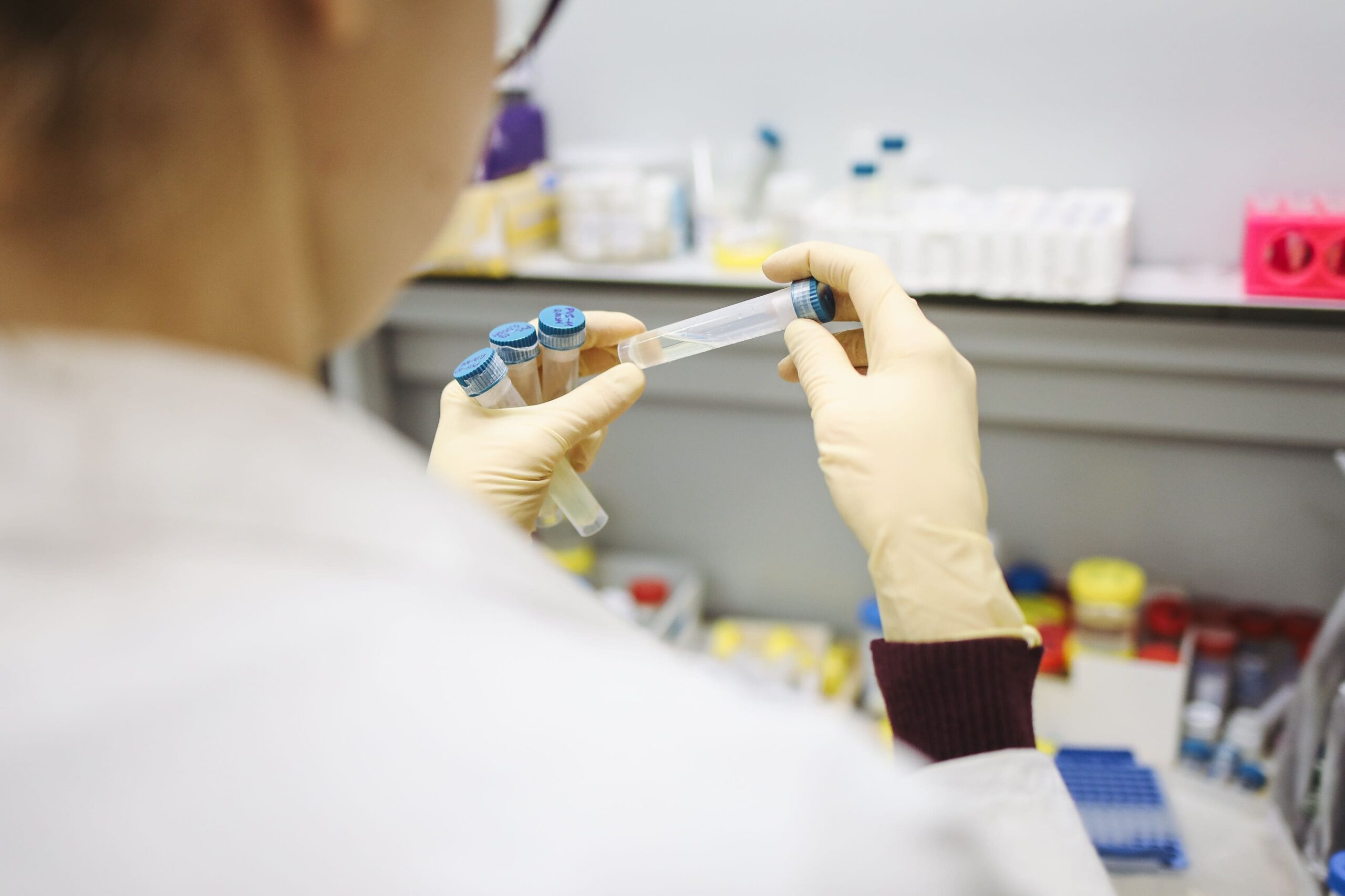
When a lab or healthcare facility needs to decontaminate biological waste, the instinct is often to reach for a chemical agent. It’s accessible, it works at low temperatures, and for small volumes or point-of-generation treatment, it can be the right call.
But chemical treatment is not a universal solution, and applying it outside the right context can create limits around validation, scalability, operational consistency, and worker exposure to chemical residues.
Understanding where chemical decontamination fits, and where it does not, helps determine whether a waste treatment program is actually protecting people or simply checking a box.
For many facilities, the decision isn’t just about treatment effectiveness—it’s about operational efficiency, cost control, and maintaining consistent, auditable waste handling processes.
What is chemical decontamination in biosafety and waste handling?
In regulated waste management, ‘decontamination’ is often used broadly, but most treatment processes are more accurately described as decontamination or neutralization depending on the method and waste stream. Decontamination refers to reducing or eliminating biological contaminants to a level that is safe for handling, disposal, or discharge, depending on the waste stream and regulatory requirements.
Proper treatment prevents the unintended release of hazardous material that could affect workers, research operations, facility compliance, and the broader environment.
Decontamination, sterilization, and disinfection: what’s the difference?
It is important to understand the difference between decontamination, sterilization, and disinfection. The terms are not interchangeable, and each has a specific meaning for waste handling.
| Level | Description |
|---|---|
| Decontamination | Reduction or inactivation of biological contaminants to a safe level for handling or disposal. |
| High-Level Disinfection | Inactivates a wider range of pathogens than standard disinfection. |
| Disinfection | Destroys most harmful microorganisms. |
For regulated medical waste and high-containment laboratory effluent, facilities often need treatment methods that meet stringent pathogen inactivation requirements. Disinfection alone typically does not meet the pathogen inactivation thresholds set by state and federal waste management regulations.
The appropriate standard for a given facility depends on the waste stream, the biosafety level, and applicable local regulations.
How chemical decontamination works in practice
Chemical decontamination inactivates microorganisms through oxidation, alkylation, or protein denaturation, processes that disrupt essential cellular structures and functions.
Key process variables
The effectiveness of any chemical decontamination process depends on several key variables. If any of these factors are outside the validated range, the process may not succeed.
- Chemical concentration
- Contact time
- Temperature
- pH level
- Mixing method
The impact of organic load and penetration
Organic load, which includes blood, tissue, or other biological materials, can interfere with chemical treatment agents. This material can consume the active chemical before it reaches the microorganisms. High organic loads often require higher chemical concentrations or longer contact times to be effective.
Penetration is another challenge. Dense waste, porous materials, foam, and clumped solids can shield pathogens from the chemical agent and reduce treatment reliability.
Chemical decontamination methods and common agents
Chemical decontamination methods for biological waste generally fall into two categories: liquid chemical treatment agents and gas or vapor‑phase agents. The optimal choice depends on the agent’s effectiveness against the target microorganisms, its compatibility with the waste stream and facility materials, and applicable regulatory requirements.
Liquid sterilants
Common liquid chemical treatment agents include peracetic acid, activated (alkaline) glutaraldehyde, and chlorine compounds such as sodium hypochlorite. These agents are effective for liquid waste streams and for treating certain liquid waste streams or materials where thermal methods are not selected, but they can be corrosive to certain metals and may degrade some plastics or elastomers over time.
Because these chemicals can be irritating or toxic through inhalation, skin contact, or spills, facilities should implement validated residue management, containment protocols, and worker exposure controls such as ventilation, personal protective equipment, and careful neutralization or rinsing after use.
Material compatibility and residues
Facilities must assess how chemical treatment agents interact with plastics, metals, and elastomers used in waste containers, equipment, and packaging. Some materials may become brittle, crack, or lose structural integrity after repeated exposure, while others (such as certain fluoropolymers or PEEK) are more resistant.
Many chemical decontamination methods therefore require a post‑process step, such as rinsing, aeration, or controlled off‑gassing, to manage any residual chemicals and ensure worker and environmental safety.
Liquid chemical decontamination workflows in labs and hospitals
Chemical treatment can support certain liquid waste workflows in labs and hospitals, especially when facilities are managing small volumes, point-of-generation treatment steps, or defined effluent handling needs.
Facilities evaluating liquid waste treatment typically consider batch or continuous approaches based on throughput, containment requirements, and discharge constraints. For larger or more complex applications, engineered solutions such as BioSAFE’s Effluent Decontamination System (EDS) are purpose-built around these same configuration choices.
A typical manual chemical treatment workflow begins with pre-treatment to reduce solids, followed by accurate chemical dosing, consistent mixing, and a monitored hold time.
A typical manual chemical treatment workflow includes:
- Collection of biological waste in compatible containers
- Accurate chemical dosing based on waste volume and type
- Agitation or recirculation to ensure even chemical distribution
- Documented verification of hold time and other validated process parameters
- Final disposal or transfer only after all release criteria are met
Operational bottlenecks most often appear during manual handling or container staging, where slowdowns increase throughput delays, add labor burden, and create variability in processing timelines—impacting overall operational efficiency. Common failures such as incorrect dilution, poor mixing, or skipped steps can result in untreated waste reaching disposal.
When to use chemical decontamination for biological waste
Low-volume and point-of-generation applications
Chemical treatment may be appropriate for certain low-volume liquid waste or bench-scale decontamination workflows, depending on the organism, waste composition, and validation requirements.
Treating waste at its point of generation helps reduce the risks associated with transporting active pathogens and limits staff exposure. This approach is commonly used for laboratory vials, small liquid containers, and localized spills.
Effluent decontamination and BSL requirements
Effluent treatment decisions are shaped by biosafety level, pathogen risk, facility infrastructure, and local discharge regulations.
At lower containment levels, chemical treatment can be a viable option for managing defined liquid waste streams before discharge.
For BSL-3 and BSL-4 facilities, containment requirements and the complexity of the waste stream typically drive facilities toward engineered decontamination systems rather than manual chemical methods.
When to select engineered or thermal systems
As waste volume increases or waste streams become more complex, facilities often move to engineered treatment systems designed for those conditions, such as BioSAFE’s Effluent Decontamination System (EDS) for liquid waste, the Tissue Digester for pathological and tissue waste, or the STI Medical Waste Treatment System for solid regulated medical waste.
Benefits and limits for infectious waste treatment
The ability of chemical decontamination to operate at low temperatures protects heat‑sensitive materials and allows flexible deployment across different facility settings.
Key benefits
- Effective for liquid waste streams and applications where heat-based treatment is not appropriate or available.
- Supports mobile or point-of-generation treatment in labs and healthcare settings.
- Supports non-incineration treatment approaches in facilities with specific handling constraints
Operational and performance limits
Manual chemical processes face real challenges at scale. Long contact times create throughput bottlenecks, poor penetration in dense or porous materials can leave pathogens shielded from the chemical agent, and high organic loads can neutralize the active chemicals before treatment is complete.
Cost and environmental constraints
Ongoing chemical consumption, monitoring requirements, and manual handling steps can increase total cost per unit of waste processed. As volumes grow, facilities often evaluate whether alternative treatment approaches provide more predictable operating costs and reduced labor dependency.
Facilities must also account for discharge limits and the potential for residual toxicity, both of which require careful evaluation when comparing manual chemical methods to engineered system alternatives.
Managing chemical treatment safety and exposure
Chemical decontamination programs carry direct responsibilities for worker safety and environmental protection that go beyond process performance.
Worker protection and monitoring
Any chemical treatment process that generates hazardous vapors requires appropriate ventilation and exposure controls.
Staff must use personal protective equipment, including gloves and eye protection, and facilities should maintain documented exposure-control procedures appropriate to the chemicals and workflow in use.
Spill response and chemical storage
A spill response plan should outline containment steps and ensure the rapid isolation of affected areas. Emergency kits with absorbents and neutralizers must be readily accessible.
Chemicals should be stored in secure, labeled containers with clear segregation of incompatible products.
Neutralization and disposal
Spent chemicals may need to be neutralized before disposal. Facilities must follow all local regulations and document each step of the disposal process.
Improper handling can result in environmental contamination, making correct disposal pathways essential for preventing the release of toxic residues.
Training
Staff handling chemical treatment agents need specific training on the hazards of each agent in use, neutralization procedures, spill response protocols, and proper PPE selection.
Incident tracking supports ongoing process improvement and helps identify gaps before they become compliance gaps.
Validation, monitoring, and documentation for compliance
Validation demonstrates that a treatment process can consistently meet defined pathogen inactivation requirements under documented operating conditions.
Documentation for compliance
Validation is only as defensible as the records that support it. Facilities must maintain:
- Standard operating procedures (SOPs)
- Batch logs and cycle records
- Alarm reports and deviation records
Monitoring programs should be reviewed regularly and aligned with internal risk assessments and biosafety plans, so that organizations can demonstrate the integrity of their waste treatment practices during inspections.
Achieve validated waste treatment with BioSAFE Engineering
Selecting the right treatment method depends on your facility’s waste volume, biosafety level, and regulatory requirements.
For many applications, engineered systems deliver more consistent pathogen inactivation, improved operational efficiency, and more predictable cost and compliance outcomes at scale.
BioSAFE Engineering designs treatment systems for healthcare, life sciences, and specialized custom applications, including the STI Medical Waste Treatment System for regulated solid waste, the Effluent Decontamination System (EDS) for liquid effluent, and the Tissue Digester for pathological and tissue waste.
Contact us to talk through your facility’s waste streams and find the right treatment approach.
Frequently asked questions about chemical decontamination
What is chemical decontamination?
Chemical decontamination is the process of using chemical reagents or cleaning solutions to reduce or remove contamination from hazardous materials, biological agents, or surface contaminants so they can be handled, treated, or disposed of safely.
What are common chemical decontamination methods?
Common decontamination methods include chemical decontamination solutions, physical cleaning methods, and water rinse or liquid rinse steps. These approaches help remove loose contaminants, reduce adhesion forces, and support effective decontamination.
What types of contaminants require chemical decontamination?
Chemical decontamination is used for biological agents, chemical contamination, hazardous materials, and liquid or gel contaminants. It is especially important when contaminants pose a direct health hazard or involve potentially toxic substances.
What role does PPE play in decontamination procedures?
Personal protective equipment, including protective clothing and level C protection, helps prevent exposure to harmful vapors, volatile liquids, and contaminated materials during decontamination procedures and handling of hazardous waste.
How does the decontamination process remove contaminants?
The decontamination process may involve chemical reactions, physical removal, or rinsing. Rinsing removes contaminants from the skin surface or equipment, while detergents and solvents help break down adhering contaminants.
When are chemical decontamination solutions preferred?
Chemical decontamination solutions are used when physical methods alone are not effective, such as with surface contaminants, organic solvents, or vaporized chemicals. They are selected based on compatibility with the contaminant and waste stream.
What happens to contaminated materials after treatment?
After treatment, contaminated articles undergo controlled disposal based on regulatory guidance, such as Environmental Protection Agency requirements. This ensures safe handling of waste, prevents redeposit, and supports environmental protection.
How is decontamination handled in emergency situations?
In emergency medical services or a mass casualty incident, decontamination programs focus on rapid clothing removal, water rinse, and physical means to remove gross contamination and reduce exposure to hazardous materials and toxic products.