
Regulated Waste Treatment for Medical and Research Facilities
STI Medical Waste Treatment System
On-site regulated waste treatment powered by continuous, low-pressure steam technology. The BioSAFE STI system delivers compliant medical waste treatment with integrated shredding, bulk reduction, and predictable operating costs.
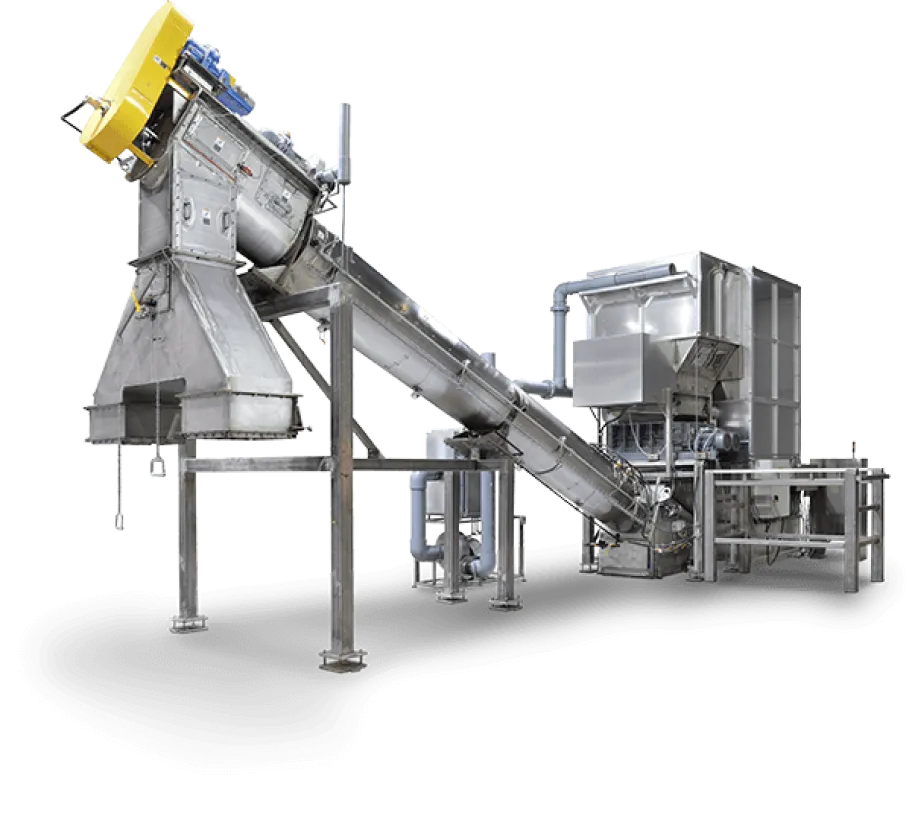


Industry’s lowest operating costs

Continuous-flow processing

Low-pressure steam technology

Integrated
shredding
A Proven Solution for Your Facility's Waste Stream
The STI medical waste treatment system safely and efficiently treats regulated solid waste, reducing costs and minimizing your environmental impact. Use it for:
- Disposal of red bag waste in medical facilities
- Devitalization of bioengineered crops in agricultural research
- Marijuana disposal
- Treatment of regulated garbage at ports and borders
- Commercial processing in centralized/third-party waste
- Treating contaminated laboratory waste
How Medical Waste Treatment Works
The STI system gives you a safe, closed-loop process for medical waste disposal. The resulting residue is decontaminated, ready for landfill disposal as municipal waste, and significantly reduced in volume.
Step 1: Load waste
Load regulated medical waste, including bags, boxes, and sharps containers, into the system using standard bins or tubs.
Step 2: Capture aerosols
Air is drawn from the feed hopper through HEPA filters to capture potential aerosolized pathogens released during dumping and shredding.
Step 3: Shred waste
Waste drops into a heavy-duty shredder. Low-pressure steam is applied directly to the material before and during shredding, decontaminating the shredder as it operates.
Step 4: Treat with steam
Shredded waste enters the steam auger chamber. Low-pressure steam is injected through multiple ports to bring all material to required treatment conditions.
Step 5: Hold time and flash-off
Waste is heated and treated for a minimum of 60 minutes. A flash-off chamber then vents sterile condensate, reducing water content by approximately 10%.
Step 6: Discharge and compact
The residue exits the end of the continuous feed steam conveyor (auger) into a standard self-contained compactor and may be recycled or disposed of as municipal waste.
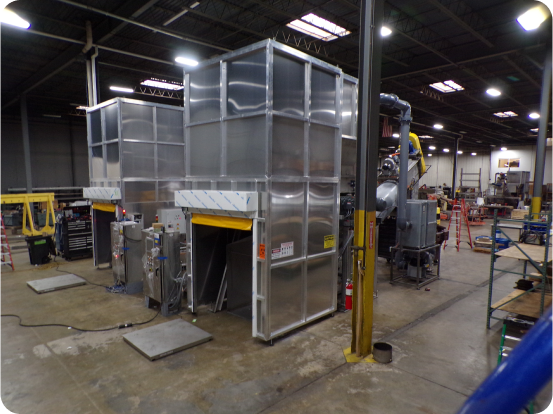
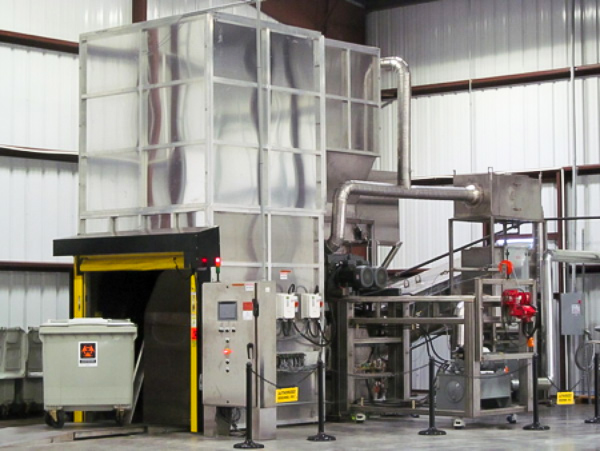
600 lb/hr STI Continuous Feed System in operation.
Closed-Loop, Continuous Feed System
A closed-loop design helps control exposure and keep processing consistent from start to finish.
- Protects operators and ensures efficient processing of biohazardous waste
- Passes waste through an integrated shredder to create uniform particles and de-identify sensitive information
- Treats waste under low-pressure steam until required treatment parameters are reached
- Transfers treated waste into a compactor to reduce volume
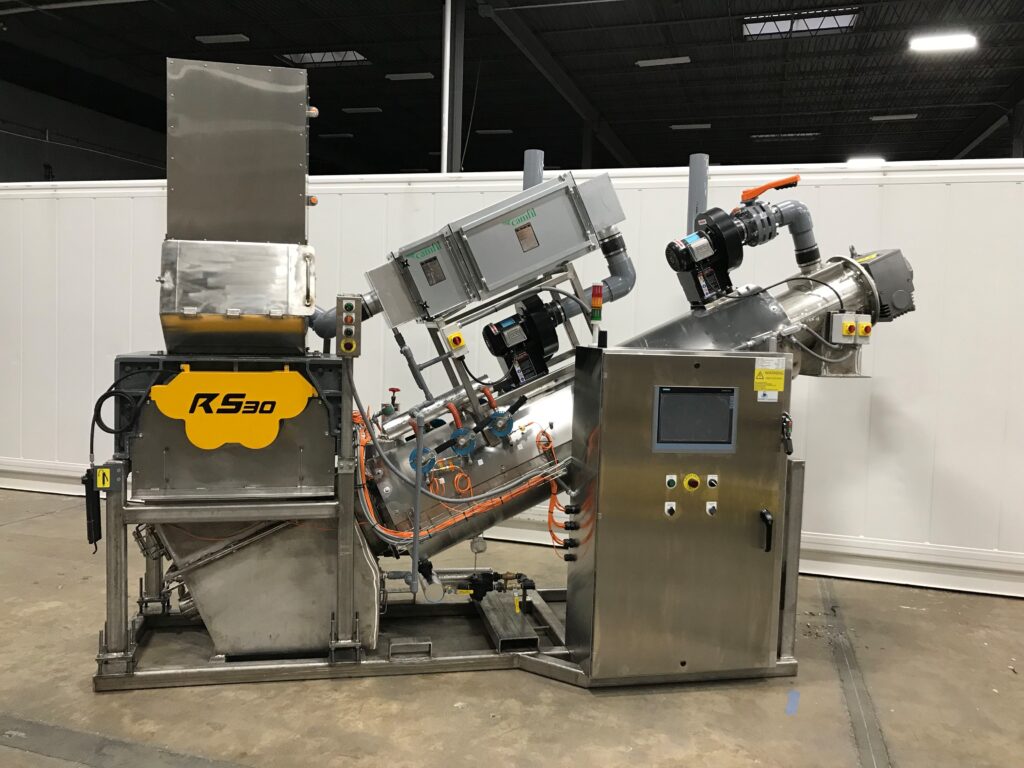
Custom Waste Treatment, Engineered for Your Facility
Every BioSAFE STI system can be configured to meet your facility’s unique space, throughput, and regulatory needs. All systems include these standard features:
- Closed-loop processing with HEPA filtration
- Custom-engineered integrated shredding
- Low-pressure steam treatment
- Simple two-button operation
Medical Waste Treatment Technology Features Comparison
STI Waste Treatment Systems have the proven lowest industry operating cost. We’ve achieved this through completely automated continuous operation (no batch processing) and sustainable steam treatment of medical waste.
| STI | Autoclave | Microwave | Rotary Autoclave | Incinerator/ Pyrolysis | Rotating Paddles | Ozone | |
|---|---|---|---|---|---|---|---|
Steam Treatment | |||||||
Moist Heat Treatment | |||||||
High-Temperature Treatment | |||||||
Chemical Treatment | |||||||
6 – Log Reduction of
Bacterial Spores | |||||||
Dry Waste Product to Landfill (inexpensive) | |||||||
Automated Loading Standard
(limits handling) | |||||||
Shredded Waste Standard
(bulk reduction=cost reduction) | |||||||
STAATT III Compatible
(Integral Shredding/Treatment) | |||||||
Bulk Reduction Achieved | 80% | 30% | 85% | 85% | 95% | 20% | 80% |
High- or Low-Pressure System (low pressure=low cost) | Low | High | Low | High | N/A | High | |
Odor-Vector Control | |||||||
Maintenance Interval of Shredder (in pounds processed) | 2-3M | 800K | 800K | 800K | N/A | 1M | 1M |
Closed System Without
Exposed Waste | |||||||
Average Capital Cost | $600K-$2M | $150-$500K | $750-$900K | $750K | $750K | $600-$900K | $900K-$1.7M |
Engineered for Efficiency
The STI system supports regulated waste treatment through practical design choices that reduce handling, support validation, and keep operating costs predictable.
Airborne Pathogens – Negative air pressure and a HEPA filter system help reduce the release of airborne pathogens during automated loading, supporting safer medical waste handling.
Odor Control – A patented cleanser is applied within the system to control odors throughout the waste stream.
Steam Treatment – Integral shredding (not pre-shredding) destroys waste containers, bags, boxes, and sharps. By increasing surface area, steam reaches more material during medical waste treatment. The system maintains boiling temperatures with dwell times ≥ 60 minutes, about two times longer than a conventional autoclave cycle.
Validation – A carrier holding self-contained Biological Indicators (challenge spores) is introduced after shredding. Spores move through the system with the waste, supporting validation and parametric monitoring required for regulated medical waste treatment.
Emissions – Operating temperatures remain below plastic volatilization thresholds, reducing issues linked to VOC emissions.
No Cold Spots or Blockages – Integrated shredding and direct steam application help expose contaminated surfaces to consistent treatment conditions. This reduces cold spots and blockages common in conventional autoclaves. The system can treat un-shredded test tubes or syringes, unlike ozone and gaseous treatment systems.

Lower Ownership Cost
Average total ownership and operating costs for BioSAFE STIs are between $0.10 and $0.12, about 3 times less expensive than typical third-party hauling and disposal fees.

Lower Waste-Hauling Costs
90% bulk-reduced waste lowers landfill impact and reduces hauling costs for treated materials, cutting tipping fees and hauling charges significantly.

Lower Utility Bills
Continuous feed design reduces labor requirements. Low-pressure steam and a hibernation mode help minimize utility costs.

Lower Maintenance Costs
STIs are engineered for rugged, simple operation, reducing downtime and limiting the need for specialized operators.
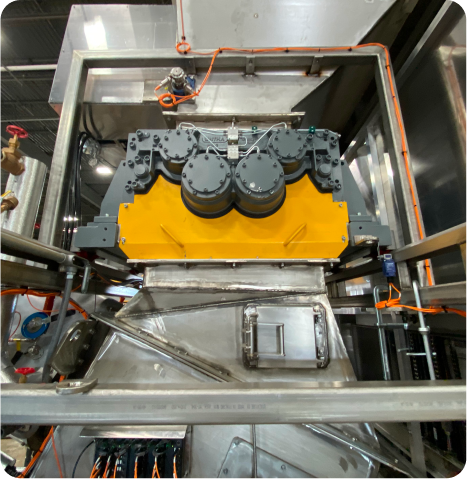
Regulated Waste Treatment for Facilities of All Sizes
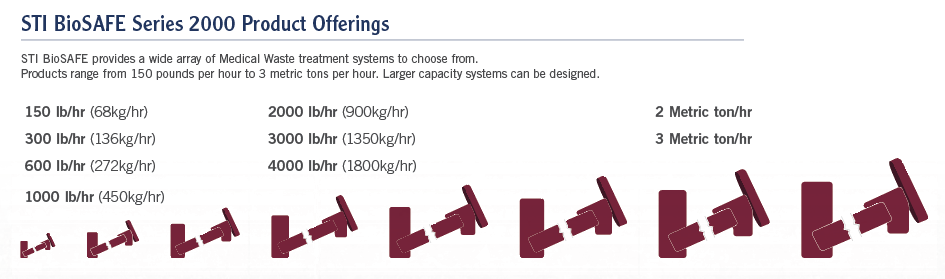
STI systems come in a range of sizes and throughput capacities. Systems can be customized to meet space constraints and energy usage requirements.
Frequently Asked Questions about Regulated Waste Treatment
Any facility generating regulated waste, or otherwise regulated biohazardous solid waste will require some type of waste disposal solution. Smaller facilities often choose to use third-party waste haulers. For larger facilities or for third-party waste processing plants, having an on-site solution can offer the most cost-effective solution. We have installed BioSAFE STI systems in:
- Hospitals
- Medical Clinics
- Third-Party Waste Processing Facilities
- Agricultural Research Facilities
- Biopharmaceutical Research Facilities
- Marijuana Operations
If your facility generates more than 350,000 lbs of regulated waste per year, contact us to see how much you could save with a BioSAFE STI.
Any organization that generates infectious waste or other regulated materials needs clear treatment and disposal options. This includes health care facilities, labs, and research environments where bloodborne pathogens, other body fluids, or potential infectious materials are present.
Smaller sites that generate small quantities of waste often rely on off-site disposal options. Larger operations benefit from on-site regulated waste treatment to improve control, throughput, and compliance.
BioSAFE systems are commonly used in:
- Hospitals and medical clinics
- Research and biopharmaceutical facilities
- Agricultural research centers
- Third-party waste processing operations
- Marijuana operations
Facilities generating more than 350,000 lbs of waste per year are strong candidates for on-site treatment.
The STI system is designed to handle a wide range of wastes generated in healthcare and research environments, including:
- Infectious waste and microbiological wastes
- Pathological waste
- Pharmaceutical waste
- Liquid wastes associated with clinical and lab operations
- Materials contaminated with chemical agents or potential infectious materials
After treatment, the treated waste is generally classified as municipal waste, depending on state regulations and local regulations.
The STI system is built to support compliance with federal regulations, state regulations, and applicable local regulations governing healthcare waste and hazardous waste.
BioSAFE designs its systems to align with guidance from federal agencies, including the Environmental Protection Agency, while supporting site-specific compliance needs tied to public health, human health, and occupational safety.
Facilities remain responsible for understanding local requirements, but the system provides a strong foundation for compliant waste management.
Yes. STI systems support a wide range of medical waste treatment volumes and throughput needs.
Available capacity options include:
- 150 lbs/hr: For facilities generating less than ~300,000 lbs/year
- 300 lbs/hr: For 300,000–600,000 lbs/year
- 600–2,000 lbs/hr: For 600,000–4,000,000 lbs/year
- 3,000 lbs/hr: For facilities generating more than 4,000,000 lbs/year
This flexibility allows facilities to match treatment capacity to actual waste volumes without oversizing.
The STI system is designed with occupational safety in mind. A closed-loop process, negative air pressure, and HEPA filtration reduce exposure risks for healthcare workers handling infectious agents and such waste.
Integrated shredding limits manual handling, and standard operating procedures support the use of personal protective equipment without adding unnecessary steps.
The STI uses steam sterilization and thermal treatment to decontaminate waste. Shredding increases surface area so steam contacts more material, supporting consistent waste treatment.
Unlike medical waste incinerators or chemical treatment methods, the system avoids combustion and minimizes emissions, helping facilities meet environmental and safety goals.
Facilities may consider off-site hauling, medical waste incinerators, or chemical-based disposal options. These treatment options and disposal options can work for some operations, especially when volumes are low.
For larger facilities, on-site systems offer more control over costs, scheduling, and compliance, while reducing reliance on third-party vendors.
The STI is a comprehensive system engineered for long-term use. Most installations operate for up to 20 years, with fewer breakdowns and predictable maintenance needs.
This long service life supports consistent waste management planning and helps facilities manage risk tied to public health and regulatory compliance over time.
Trusted Worldwide by Industry Leaders


