Wastewise

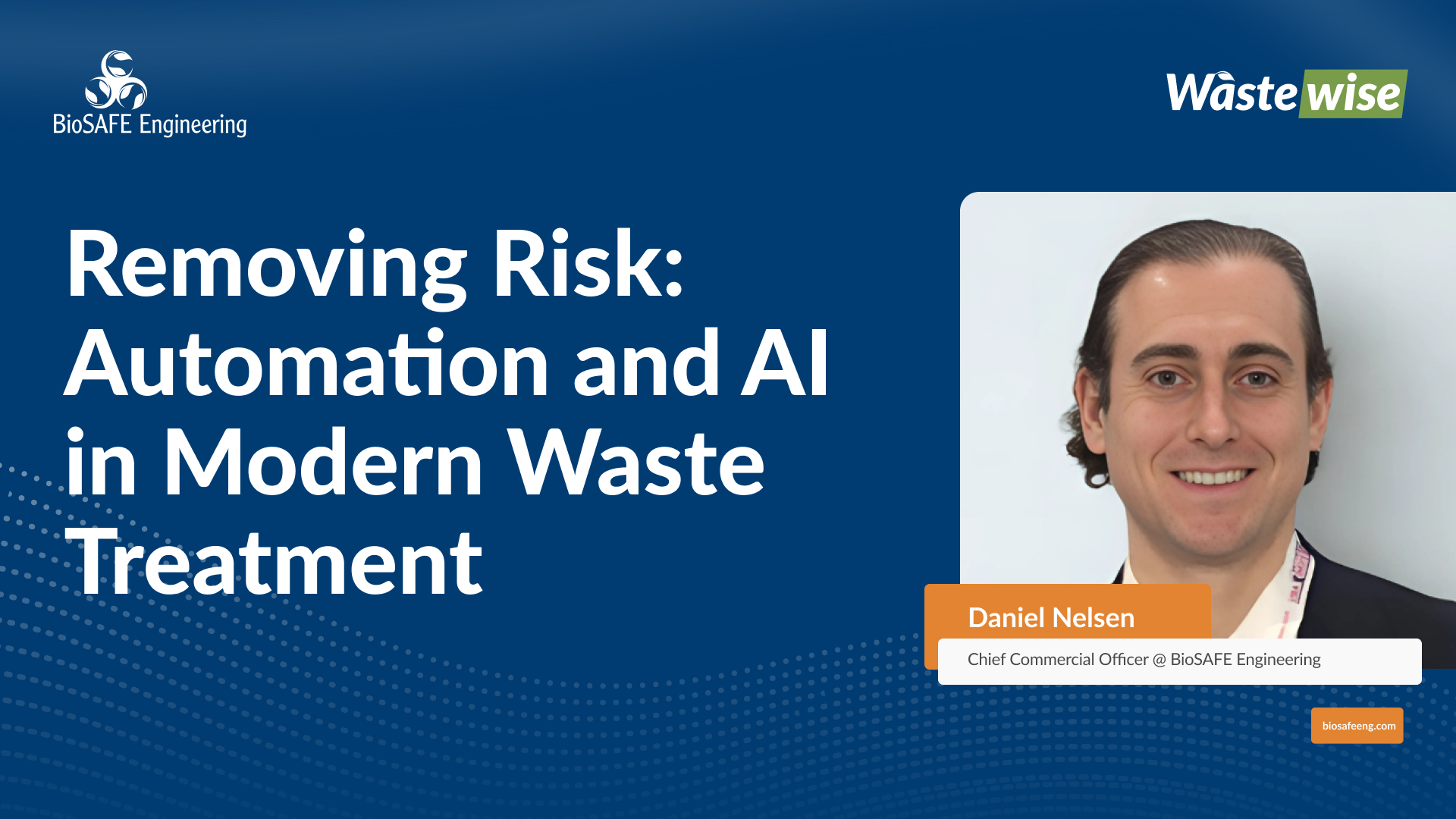
Removing Risk: Automation and AI in Modern Waste Treatment

Episode Summary

In this episode of WasteWise, Daniel Nelsen explores how laboratories are using artificial intelligence and automation to drive efficiency and safety in 2025. He shares how the shift from manual tasks to automated systems is helping labs process more samples while reducing risk for workers. He walks through real-world changes, like automating the cutting of frozen plasma bottles—work that once exposed people to injury and slowed down production.


Daniel highlights how AI models are now helping labs monitor quality and spot problems before they escalate. These systems sift through streams of sensor data and help teams focus on the right issues sooner, keeping facilities compliant and operations smooth. He also explains how AI acts as a “backstop” for preventive maintenance, ensuring that equipment failures are caught early across multiple sites.


While Daniel sees strong momentum for AI in research and reference work, he points out that full integration in critical lab systems still faces hurdles. Trust, validation, and regulatory requirements remain top concerns. As new technologies emerge, labs and their partners continue to balance safety, compliance, and the promise of smarter automation.

BioSAFE Engineering

Daniel A. Nelsen

Chief Commercial Officer

Daniel specializes in applying automation and AI solutions to lab processes, helping teams improve compliance, efficiency, and safety in regulated environments.

Key Insights

Automation Reduces Risk and Unlocks New Scale in Labs

Replacing manual processes with automation doesn’t just improve speed—it also removes people from hazardous tasks. In labs, jobs like cutting frozen plasma bottles or pipetting samples are repetitive and risky. Automation systems now handle these steps faster and more safely, moving from single-sample handling to processing hundreds or thousands at a time. This shift enables labs to grow without being limited by human throughput or injury risk. As automation spreads, even legacy, people-driven processes can be transformed, letting staff focus on higher-value work. The result is safer workplaces, fewer bottlenecks, and a path to scaling operations in ways that weren’t possible just a decade ago.

AI Delivers Proactive Maintenance and Quality Control

Artificial intelligence in labs has moved beyond buzzwords, providing real value in equipment maintenance and quality oversight. By combining data from sensors with AI models trained on manuals and schedules, labs can predict when a system needs attention before it fails. This “backstop” helps standardize maintenance across sites and prevents costly breakdowns. On the quality side, AI monitors streams of sensor data and flags anomalies, so teams can act early. These tools let staff focus on solving problems, not just finding them. The result is a more reliable, compliant operation—especially important in regulated environments where downtime and errors carry real costs.

Integration and Trust Are the Next Hurdles for AI in Labs

Widespread adoption of AI in lab environments isn’t just a technical challenge—it’s also about trust, validation, and compliance. While AI can streamline research and information retrieval, deeper integration into core lab systems raises questions about responsibility and oversight. Regulations often require a human to review and sign off on critical steps, such as decontamination cycles or patient care processes. Until there’s broad agreement on how to validate AI decisions and assign liability for errors, many organizations will keep people in the loop. Moving forward, the balance between automation and human oversight will shape how quickly labs can take full advantage of AI’s potential.

Episode Highlights

Instant Access to Global Regulations Transforms Lab Workflows

Regulatory compliance remains one of the biggest challenges for labs operating across multiple regions. Having digital tools that instantly pull up references from global regulations removes hours of manual research and guesswork. This shift lets teams move faster and spend less time tracking down rules or cross-checking requirements. With regulations always changing, access to current, centralized information helps organizations stay compliant and avoid costly mistakes. The result is less time spent on paperwork and more time focused on core lab work.

“Having something that can instantly pull up links to and references from global regulations is incredibly useful and an incredibly handy tool. It just makes a lot of the time-consuming work happen a lot faster.”

Lessons from the First IoT Boom Shape AI Adoption

The initial wave of the Internet of Things (IoT) promised seamless data integration across devices and systems, but it fell short when teams struggled to use the data effectively. Today’s AI and automation advances are different—systems now process and connect data streams much more efficiently, finally delivering on earlier promises. This new generation of technology enables rapid scaling and better insight, but it also builds on lessons learned: success depends on having the right tools for analysis, not just more data. As AI adoption grows, organizations are better equipped to connect devices, spot trends, and drive decisions, creating a foundation for real digital transformation.

“What we saw with the first Internet of Things boom was the ability to connect a multitude of disparate sensors, readouts, displays, machines, factories, into a single data feed. Where we struggled after the initial boom of integration was being able to effectively use that stream of information and be effective in scaling and connecting a lot of those devices and systems. We had to create new languages for systems to talk to each other. We had to find new ways to process and analyze very large batches of data.”

Automation Breaks Through Human Speed Limits in Lab Tasks

Manual processes in labs, like cutting frozen plasma bottles, come with safety risks and speed limits. No matter how skilled a person is, there’s a cap on how fast and safely they can work. Automation changes the equation by removing people from hazardous steps and multiplying throughput far beyond human ability. Tasks that once took ten seconds per bottle now happen in fractions of a second, with machines safely handling multiple units at once. This leap lets labs scale up quickly while keeping workers safe, opening doors to new efficiencies across the industry.

“It’s just not feasible to expect a person to be able to get their bottle cutting time from 10 seconds a bottle to five seconds a bottle to one second a bottle. At some point you hit an upper limit. What automation has allowed us to do is remove the person from that more dangerous position and be able to go from a bottle every 10 seconds to five seconds to one second, and now you’re doing 10 bottles every second.”

Custom AI Models Remain a Challenge for Most Labs

While general-purpose AI tools are widely available, labs that want deeper integration often hit a wall. Building a custom AI model tuned to a specific workflow requires expertise few teams have in-house. Most organizations must either hire specialized talent, work with expensive third parties, or wait for more accessible solutions. This hurdle is slowing full-scale AI adoption, with many labs using AI as a personal productivity tool but holding off on enterprise-wide deployment. The gap between available technology and practical application will narrow as tools become easier to train, but for now, the industry is in a holding pattern.

“There’s a disconnect now. You have a handful of commercially available or publicly available models that can do a whole lot of things well, but maybe not your specific thing great or perfectly. But to move to the next level of integration, you’re really looking at building your own large language model, using your own training data and own weighting… Unless you have an AI-capable computer scientist on your staff, that’s very challenging to do in-house, and that’s something you’re either looking at going to some outside group to help you build that model, to help you ingest the right training data, identify the right training data, and then play with different weightings within that data until you’re getting useful, actionable information and output.”

Related Content

Sustainable Solutions in Waste Treatment and Recycling

Phillip Mervis explores the intricacies of recycling and sustainability in waste management, revealing BioSAFE's innovative approaches.

Waste Compliance. Environmental Sustainability.

Want to learn more about how BioSAFE Engineering is helping hospitals, pharmaceutical companies,
and waste disposal companies reduce operating expenses and hit sustainability targets? Contact us.