
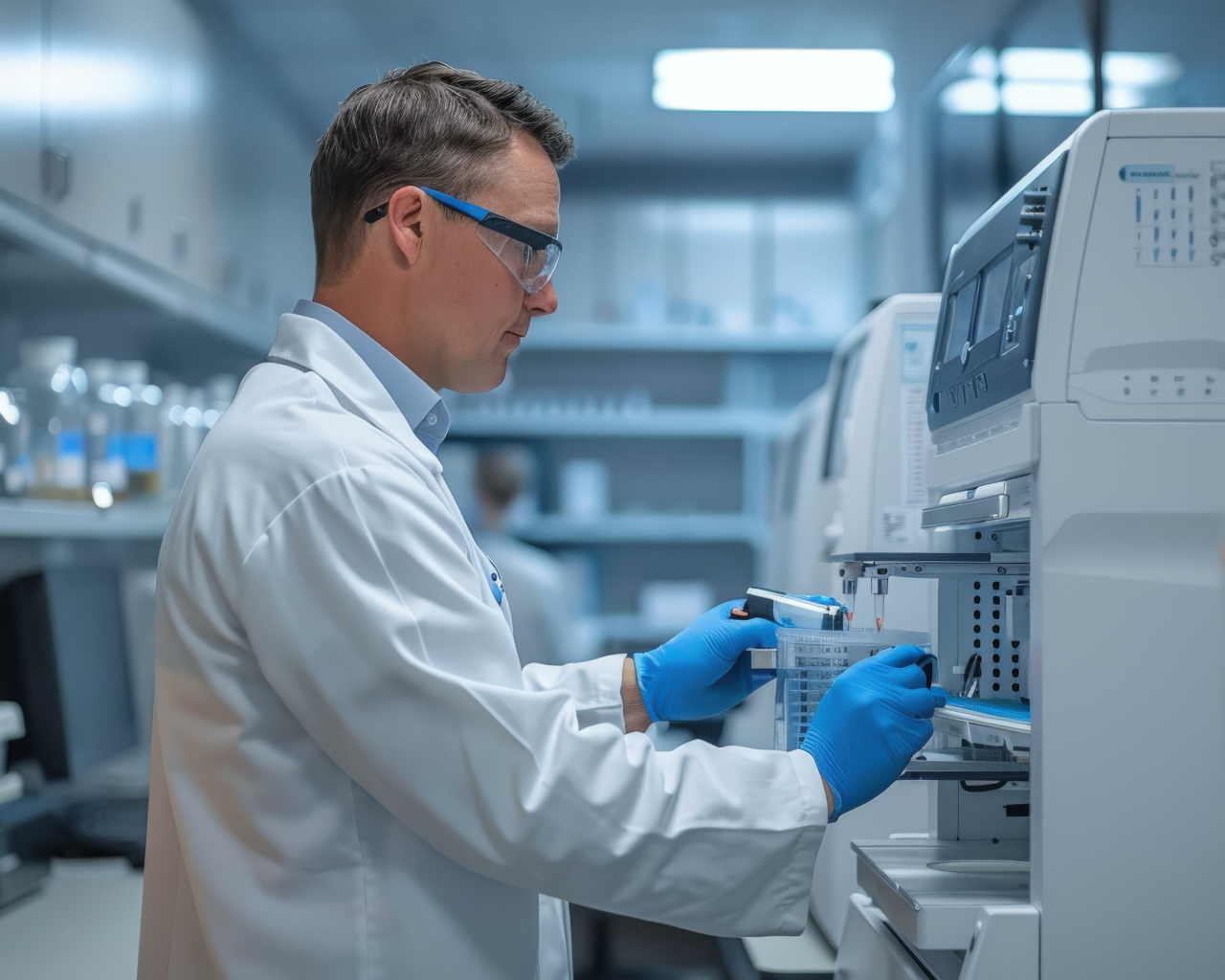
Today, nearly every organization has sustainability goals on paper. But for many, achieving those goals—especially when it comes to contaminated waste—is a different story.
Despite growing pressure to meet environmental targets, companies often find themselves stuck with complex waste streams that seem impossible to recycle responsibly. Medical waste, lab materials, and treated organics aren’t typical recyclables. And when disposal is the default, sustainability takes a back seat.
In a recent interview with WasteWise, Phillip Mervis, CEO at BioSAFE Engineering, reframed how we should think about this challenge entirely. Rather than starting with disposal as the default, he asks a fundamentally different question: “What can we do with it, after it’s been safely decontaminated?”
The question itself reveals how organizations can systematically analyze, treat, and recover value from contaminated materials while maintaining safety and regulatory compliance, forming the foundation of a genuinely strategic approach to sustainable waste management.
Foundation of Sustainable Waste Management – Analyze Your Components
Understanding the waste components comes first.
Phillip explains that BioSAFE’s process is fundamentally different. The process starts not with disposal, but with discovery. They partner closely with their clients’ engineering teams to analyze the composition of waste streams. Why? Because as he explained, you can’t recycle or repurpose what you don’t understand. In many cases, what looks like “waste” is actually a source of untapped value.
The process begins with detailed analysis. The team dissects products, reviews material safety data sheets (MSDS), and tests individual components for recyclability and market potential, identifying recoverable materials that might otherwise be discarded unnecessarily.
Some materials are obvious candidates for reuse. Others require deeper analysis, especially when a single product is made from multiple materials with different values and contamination risks. By evaluating each component individually, teams can determine whether pre-separation is needed and where value can be recovered.
Custom Plans for Sustainable Waste Management
Once they understand what’s in the waste stream, the next challenge is designing the right treatment while preserving material value.
Custom Treatment Plans for Every Material
According to Phillip, decontamination isn’t a one-size-fits-all process. Effective treatment requires custom plans that consider each material’s specific risks and characteristics. Rather than focusing solely on infection control, the approach also protects material quality so items can be recycled, reused, or repurposed after treatment.
Pre-Separation Strategy
In many cases, pre-separation is required. When products are made from different materials, separating components before decontamination improves safety and sustainability outcomes. Certain plastics, metals, or composites may respond better to other treatment methods, and some materials can’t be recycled at all if they’re processed together.
Phillip shared how a client produced a medical device made of several types of plastic. By separating its components before treatment, his team could decontaminate each material independently and send them to distinct recycling lines—something that wouldn’t have been possible if processed together.
Clean Treatment Without Harmful Byproducts
BioSAFE’s method treats waste safely without compromising its potential for reuse. The team focuses on neutralizing pathogens while preserving the material’s viability for reuse or recycling. They achieve this without burning, chemicals, or any process introducing harmful pollutants into the environment.
The result? A practical path forward for challenging waste streams.
Sustainable Waste Management Through Value Recovery
Balancing Multiple Objectives in Sustainable Waste
Decontamination is only part of the journey. Once material is safe to handle, the real work begins: figuring out what to do with it.
BioSAFE’s approach extends beyond neutralizing waste, helping clients reclaim its value. That might mean identifying viable recycling markets, repurposing materials, or exploring unconventional applications like plastic filler or brick manufacturing. It all depends on the material, the volume, and the client’s goals.
Sometimes, recycling isn’t chemically or economically viable. In those cases, BioSAFE shifts the conversation: Can this be reused in another form? Can we reprocess it into a material that supports a different function, even if it’s not its original one?
“Some of the waste cannot be effectively recycled either chemically or physically. Can it be made into a different product? Can it be used as a plastic filler? Can it be used in a brick? What can we do with it?” Phillip explained.
Landfill diversion is necessary, but treating waste as a material with strategic value matters more. Clients often discover they’re building new opportunities from cutting waste.
Balancing Multiple Objectives in Sustainable Waste Management
Sustainable waste management sounds simple in theory, but it’s a balancing act in practice.
For some organizations, the top priority is maximizing material recovery. For others, it’s destroying sensitive IP, maintaining brand protection, or meeting strict regulatory requirements. Phillip explained that BioSAFE’s role is to help clients identify the best combination of safety, cost-efficiency, and material recovery based on client needs.
Different Industries, Different Priorities
Phillip has worked with companies whose main concern wasn’t value recovery at all. An automotive industry client, for example, needed to ensure that used components never re-entered the market. In another case, a greenhouse focused on decontaminating soil while protecting proprietary research. Both had very different definitions of success.
As Phillip noted, “The automotive customers wanted to get the most money outta their product, and the second one was to make sure their product was destroyed.”
Every effective solution starts with clear alignment. What does the client care about most? What trade-offs are acceptable? When you understand the full picture—financial, environmental, and strategic—you can engineer a solution that delivers on all fronts.
Implementing Sustainable Waste Management
The engineering approach to sustainable waste management requires practical considerations for real-world application.
BioSAFE’s systems are designed to handle:
- Liquid waste from research processes and clinical applications using Effluent Decontamination Systems (EDS)
- Solid waste including red bag medical waste processed through STI (Solid/Tissue Interface) systems
- Tissue waste from labs and research facilities using Tissue Digester technology with alkaline hydrolysis
The equipment can process everything from laboratory bench-top volumes to large commercial operations, making it suitable for hospitals, pharmaceutical companies, research facilities, and medical waste processing companies.
Cost and Environmental Advantages
Unlike incineration, BioSAFE’s non-incineration technology offers the lowest operating costs in the industry while being environmentally responsible. These systems don’t produce harmful emissions or require expensive air pollution control equipment. The technology also enables plastics recycling and landfill diversion, whereas incineration destroys materials completely and creates air pollutants.
Flexible System Design
BioSAFE designs systems for laboratory benchtop units to large commercial operations. The equipment can be configured as portable deployable units or permanent installations designed for decades of service. Each system is customized based on the facility’s specific waste streams, volume requirements, and operational needs.
Full-Service Support
The company provides full-service support from initial system design through installation, commissioning, and on-site training. All systems are fully assembled and tested at their 55,000 sq. ft. manufacturing facility before delivery to ensure they operate according to specifications.
Implementing a Strategic Approach to Sustainable Waste Management
Sustainable waste management requires a systematic methodology that aligns environmental and business objectives through strategic planning and execution.
When organizations analyze components first, design custom treatment plans, implement appropriate decontamination methods, and balance competing priorities, they move beyond reactive disposal to proactive waste management. That’s the strategic framework BioSAFE Engineering applies with clients every day.
Whether you aim to meet sustainability targets, ensure regulatory compliance, or optimize operational efficiency, success starts with asking the right question: “What can we do with it after safe decontamination?” Instead of “How do we get rid of it?”
A strategic approach to sustainable waste management enables systematic planning, measurable outcomes, and integration with broader organizational environmental goals.
FAQs:
What makes waste management truly sustainable?
Sustainable waste management goes beyond just disposal—it involves analyzing waste components, implementing custom treatment plans that preserve material value, and finding ways to recover, reuse, or repurpose materials after safe decontamination. The goal is to minimize environmental impact while maximizing resource recovery.
How do you determine if contaminated materials can be recycled or repurposed?
The process starts with detailed component analysis, including reviewing material safety data sheets (MSDS) and testing individual materials for recyclability and market potential. Different materials within a single product may require separation before treatment to preserve their value for different recycling streams or repurposing applications.
What’s the difference between traditional waste disposal and strategic sustainable waste management?
Traditional disposal asks “How do we get rid of it?” while strategic sustainable waste management asks “What can we do with it after safe decontamination?” The strategic approach balances multiple objectives—safety, regulatory compliance, cost-efficiency, and material recovery—rather than defaulting to disposal.
How do organizations balance safety requirements with sustainability goals?
Effective sustainable waste management requires custom treatment plans that consider both contamination risks and material preservation. Pre-separation strategies, appropriate decontamination methods, and clear priority setting help organizations meet safety and regulatory requirements while maximizing opportunities for material recovery.
What should organizations consider when implementing sustainable waste management?
Organizations need to identify their primary objectives—whether maximizing material recovery, protecting intellectual property, meeting regulatory requirements, or reducing costs. Understanding waste stream composition, available treatment options, and long-term sustainability goals helps create a balanced approach that serves multiple business and environmental objectives.