

Hospital operations executives are facing increasing pressure to reassess how waste is managed. Rising disposal fees, evolving regulatory expectations, and growing pressure to demonstrate environmental stewardship are driving the need for smarter waste management strategies.
Healthcare facilities in the U.S. generate over 5.9 million tons of waste annually, with costs rising faster than inflation. Daniel Nelsen, Chief Commercial Officer at BioSAFE Engineering, explains, the environmental footprint of medical waste spans four stages: production, transportation, treatment, and disposal.
Why Innovation Matters in Healthcare Waste Management
Healthcare waste collection has evolved from a simple operational task into a complex strategic challenge. Three converging forces are driving this shift, increasing the need for more adaptive waste management approaches.
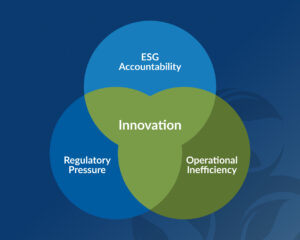
Regulatory Pressure
Regulatory oversight continues to evolve across environmental, infection-control, and transportation requirements. Each area introduces distinct standards that facilities must coordinate across their waste management processes. In systems that rely on multiple hand-offs, maintaining clear chain-of-custody documentation becomes increasingly important to support audit readiness and operational transparency.
As requirements continue to develop, healthcare organizations are placing greater emphasis on solutions that help them adapt while maintaining adopting smart waste management technologies.
Operational Inefficiencies
Traditional waste collection systems can introduce costs that extend beyond visible disposal fees. “The burden of inefficient operations is often much greater than a granular look at how much electricity you used this month,” explains Daniel Nelsen.
Multiple truck trips, extensive human handling, and complex logistics can increase both direct costs and environmental impact. Each additional touchpoint introduces inefficiency that accumulates across the entire operation.
ESG Accountability
Boards and investors increasingly view environmental performance as a key institutional indicator. Healthcare organizations are expected to demonstrate measurable progress toward sustainable solutions. This shift positions waste management as both an operational priority and a strategic consideration that can influence competitiveness and regulatory positioning.
The Business Case for Environmental Stewardship
“A lot of the environmental focus now could certainly be reframed to operate efficiently and operate with good business practices,” Dan notes.
Healthcare organizations adopting innovative waste management solutions are finding that sustainability can improve financial performance. On-site systems that decontaminate and segregate materials help reduce reliance on hauling and landfill use while opening recycling markets. Takeda’s investment in this approach cut disposal costs and generated revenue from recovered plastics.
Beyond savings, chemical-free treatment methods and modular designs support compliance processes, enhance worker safety, and provide transparent ESG reporting. These capabilities help organizations capture additional value from their waste streams while aligning operational efficiency with sustainability goals.
5 Waste Management Solutions for Healthcare
1. On-Site Biomedical Waste Treatment Systems
The foundation of smart waste management often begins with bringing treatment capabilities in-house. On-site systems can reduce reliance on third-party services while decreasing transportation emissions. Modern steam treatment infrastructure achieves up to 90 percent bulk reduction while providing validated decontamination, allowing facilities to manage waste treatment as an internal capability where appropriate. It is environmentally friendly and cost-effective, reducing both disposal fees and carbon footprint.
2. Effluent Decontamination Systems (EDS)
Laboratory liquid waste requires specialized solutions. Effluent decontamination systems handle laboratory wastewater, shower drainage, and autoclave effluent within biocontainment boundaries through continuous thermal-based neutralization. This chemical-free method complements solid waste treatment by supporting more comprehensive on-site capabilities.
3. Integrated ESG Waste Reporting Dashboards
Waste treatment systems generate valuable data that organizations can capture and analyze. Real-time waste metrics allow facilities to track progress toward sustainability goals while supporting compliance reporting. These dashboards capture data necessary for Scope 3 emissions reporting, providing transparency that boards, investors, and auditors increasingly demand.
4. Modular System Configurations
Effective deployment requires flexible design strategies that accommodate varying operational realities. Modular configurations adapt to different department sizes, volumes, and waste types while minimizing installation complexity. This flexibility allows facilities to evaluate waste streams individually, identifying segregation and recycling opportunities.
5. Chemical-Free Technology
Reducing chemical dependencies creates significant operational advantages. Modern thermal-based treatment processes neutralize infectious materials without hazardous chemical additives, supporting permitting processes and improving staff safety conditions. This method supports LEED certifications while helping facilities maintain consistent regulatory compliance.
How to Evaluate the Right Innovative Waste Management Solutions
Build a Comprehensive Criteria Matrix
Effective evaluation begins with mapping three critical dimensions: waste volume, risk level, and compliance needs.
- Waste volume: Document generation patterns by department, identifying peak volumes and seasonal variations
- Risk level: Assess from standard red bag waste to specialized laboratory materials requiring advanced containment
- Compliance needs: Map requirements specific to your facility type, location, and regulatory jurisdiction
Develop scoring criteria that weight factors according to organizational priorities. Consider creating evaluation matrices that assess solutions across operational impact, compliance positioning, cost implications, and strategic alignment.
Conduct Waste Stream Analysis
Examine each waste stream individually. Evaluate whether materials can be segregated more effectively, determine recycling potential for non-contaminated components, and assess volume reduction possibilities.
Many organizations find that comprehensive waste stream analysis identifies immediate improvement opportunities while supporting longer-term strategic initiatives.
Apply Strategic Decision Criteria
Frame evaluation questions around long-term strategic impact rather than just immediate operational considerations. Key questions include:
- Does this solution improve audit readiness and operational control?
- Can we measure and report emissions reductions to support ESG goals?
- Will this solution scale as our organization grows?
- How does this impact our regulatory compliance posture?
Consider developing decision frameworks that evaluate solutions against multiple scenarios, including regulatory changes, volume growth, and strategic initiatives.
Assess Operational Integration Requirements
Consider how new solutions integrate with existing workflows, staffing models, and facility infrastructure. Evaluate space requirements, utility needs, and staff training implications. Determine whether modular designs offer advantages for phased implementation or future expansion.
Calculate Total Cost of Ownership
Move beyond initial capital costs to examine long-term operational expenses, maintenance requirements, and potential savings from optimized waste handling strategies and stronger compliance positioning.
Include risk mitigation value in calculations, considering cost avoidance from improved regulatory alignment and operational reliability.
Innovation Is the Future of Healthcare Waste Strategy
Healthcare waste management is evolving as organizations respond to increasing operational, regulatory, and environmental demands. Organizations that recognize this shift can position themselves to gain advantages that extend beyond operational efficiency.
What often begins as compliance-driven updates can develop into institutional differentiation that supports recruitment, community relations, and long-term sustainability goals.
Frequently Asked Questions About Innovative Waste Management Solutions
How do on-site systems affect total cost of ownership for waste management operations?
On-site treatment systems can significantly reduce per-pound processing costs by shifting treatment closer to the point of generation, reducing volume before transport, and providing greater control over scheduling and throughput. BioSAFE systems are designed to improve operational efficiency across the full waste management chain — whether treatment happens entirely on-site or as part of a broader processing network.
Are BioSAFE systems compliant with regulatory requirements?
Yes, all BioSAFE technologies are engineered to meet applicable containment, treatment, and environmental standards while offering a chemical-free alternative to traditional disinfection methods. This thermal treatment approach simplifies compliance by eliminating chemical handling requirements and supports comprehensive audit documentation.
What waste types can each system process?
- STI units: Regulated medical waste, red-bag waste, pathological materials, and organic waste that would otherwise occupy biohazard trash cans.
- Effluent Decontamination System: Laboratory effluent and biocontainment wastewater—ideal for facilities adopting single stream recycling for solids yet needing liquid decontamination.
- Tissue digesters: Utilize alkaline hydrolysis to handle tissue and other high-moisture recyclable materials, reducing load on landfill and downstream material processing operations.
How do BioSAFE systems achieve operational simplicity?
BioSAFE systems feature sophisticated engineering that enables simple operation through advanced automation. Two-button operation controls complex treatment processes while automated monitoring and self-diagnostic capabilities ensure consistent results without requiring specialized technical expertise from facility staff.
Can systems accommodate future growth and changing requirements?
Systems can be configured for different department sizes and waste volumes while supporting future capabilities like recycling programs and enhanced data collection for evolving ESG reporting requirements.